
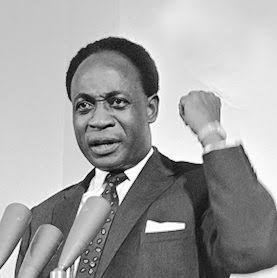
Born: 21 September 1909
Died: 27 April 1972
Every 21st September, Ghanaians pause to reflect on the man who led their country out of colonial rule, reshaped its identity, and staked a claim not just for Ghana, but for Africa. Dr. Kwame Nkrumah remains a figure of inspiring achievements, bold criticism, and enduring legacy.
Early Life & Intellectual Awakening
Kwame Nkrumah was born in Nkroful, in the Western Region of what was then the Gold Coast. His father was a goldsmith; his mother earned a living, and from early on, the young Nkrumah showed academic promise.
He attended local missionary schools, then Achimota College — a prestigious institution that exposed him to colonial education, but also to ideas of identity, self‐worth, and nationalism.
In 1935, he travelled to the United States. At Lincoln University, Pennsylvania, and later at the University of Pennsylvania, he studied philosophy, sociology, literature; he read Marx, Lenin, Garvey, other thinkers of nationalism and socialism. These years forged his intellectual and political bearings—he saw colonialism not only as political oppression but as economic and cultural dependency. 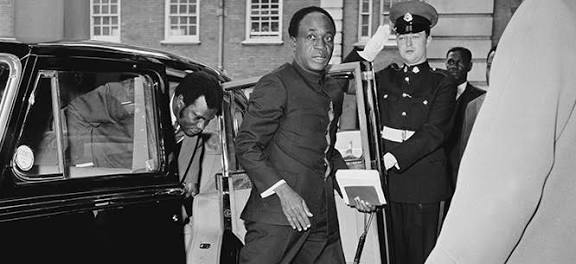
Nkrumah also immersed himself in student activism. He led or was active in student associations, organised Pan-African conferences, networking with other activists and thinkers. Brought back to the Gold Coast these currents of thought—self-rule, mass mobilisation, non-cooperation.
From Nationalist to Prime Minister: The Road to Independence
After returning to the Gold Coast in 1947, Nkrumah joined the United Gold Coast Convention (UGCC) as General Secretary. But differences over pace, approach, inclusion, and mass mobilisation led him to break away and found the Convention People’s Party (CPP) in 1949—one committed to “self-government now.”
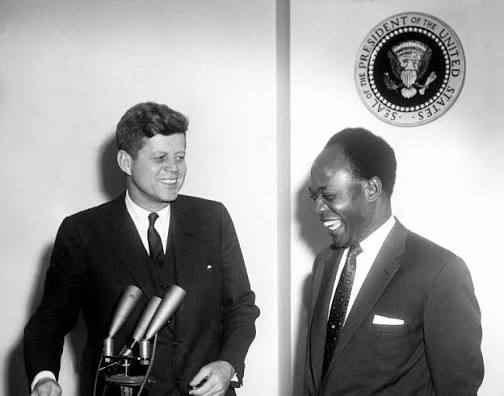
In 1950, “Positive Action” campaigns—strikes, protests, boycotts—were launched. Though colonial powers arrested him, the momentum built. In the 1951 elections the CPP won decisively and Nkrumah was released from prison to become Leader of Government Business (a precursor to Prime Minister). By 1952, he was Prime Minister under the colonial framework, and by 6 March 1957, Ghana became the first sub-Saharan African nation to gain independence from colonial rule. Nkrumah became its first Prime Minister.
Bold Nation‐Building: Infrastructure, Education, and Industrialisation
What Nkrumah did in the first decade of independence is still impressive for scale, ambition, and lasting impact. Some of the major achievements include:
• Akosombo Dam (Volta River Project): Completed in the mid-1960s, this project still provides massive hydroelectric power, transforming energy supply, enabling industrial growth.
• Expansion of higher education and technical training: He established or expanded institutions such as the University of Ghana, Kwame Nkrumah University of Science & Technology (KNUST), University of Cape Coast, numerous teacher training colleges, medical school, etc.
• Industrial factories & local manufacturing: To reduce reliance on imports, Nkrumah initiated factories: Abosso Glass, Kade Match Factory, sugar factories (Asutuare), meat processing in Bolgatanga, rice milling, etc. These were meant not only as economic engines, but as symbols of a self-reliant Ghana.
• Urban planning & transportation: The development of Tema — a new port city, townships; the Tema motor-motorway linking Accra and Tema; expansion of road networks. Housing schemes. Planned estates.
• Cultural, social, and health developments: Free primary education, health facilities and hospitals, welfare policies. His government also invested in culture: museums, arts institutions, broadcasting. The Ghana News Agency (GNA) was established to help relay Ghana’s narrative globally.
Pan-Africanism & International Influence
Nkrumah was not just building Ghana; he dreamed of a united Africa. Some key things:
• He argued that Ghana’s independence was meaningless unless it was linked to the total liberation of the continent.
• He was central in forming the Organisation of African Unity (OAU) in 1963, pushing for African nations to come together politically, economically, culturally.
• Supported anti-colonial movements elsewhere: providing moral, sometimes material, support to liberation struggles in Africa, envisioning Africa free of colonial borders and hegemony.
The Flip Side: Authoritarianism, Economic Strain, and Downfall
No great leader is without contradictions. Nkrumah’s story includes rising challenges that ultimately led to his overthrow.
• Increasing centralisation and political suppression: After surviving an assassination attempt in 1962, Nkrumah’s government became more closed. The Preventive Detention Act allowed detention without trial. Opposition voices became marginalised. By 1964 Ghana was declared a one-party state, with Nkrumah as life president of both party and nation.
• Economic pressures & external debt: Big industrial and infrastructure projects required massive capital. The Volta Dam, for example, while transformative, burdened the country with huge financial obligations. Some factories did not become as efficient or profitable as projected. Cocoa, Ghana’s key export, suffered price fluctuations internationally, affecting government revenues.
• Disconnect & governance difficulties: As projects scaled up, so did bureaucratic inefficiencies, corruption allegations, shortages of basic goods. The balance of power tilted toward security apparatus; public dissent expressed in strikes, protests.
• Overthrow in 1966: While Nkrumah was abroad (visiting China), his government was deposed in a military coup on 24 February 1966.
Legacy: Why We Celebrate & What Endures
Despite the controversies, Nkrumah’s imprint is deep. The following are reasons why every 21st September remains a worthy day of celebration—and lessons for today.
1. Symbol of aspiration
Nkrumah showed what it looks like when a colonized nation claims ambition—not just to be free, but to be prosperous, proud, modern. His life embodies a belief in dignity, in agency.
2. Built institutions still in use
Universities, hospitals, banks, power infrastructure, roads—all are still part of Ghana’s skeleton. They provide services, employ people, anchor communities. Even when faltering, they keep his vision alive in everyday life.
3. Pan-African spirit
His ideas influence successive generations: thinkers, activists, leaders who continue to argue for African unity, self-reliance, cultural authenticity. Organisations and festivals honouring him keep the conversation alive. 
4. A cautionary tale as much as inspiration
Nkrumah’s rise and fall teach that vision must be paired with sustainable management: financial prudence, responsive governance, openness to criticism, balance between central authority and citizen voice. For modern Ghana (and across Africa), these are still very useful lessons.
5. Memory & identity
The Kwame Nkrumah Memorial Park and Mausoleum in Accra is a place people visit to pay respect, to learn, to reconnect with their history. The architecture, the exhibits, all are reminders that history is not distant, and that identity is constructed. 
Conclusion
As Ghanaians celebrate 21 September, they celebrate more than a man’s birthday. They celebrate a time, a turning point—the moment when colonial chains were cut, when new possibilities opened up. Osagyefo Dr. Kwame Nkrumah was flawed, but grand in vision; his reach exceeded his grasp in many ways, but that very reach inspired a continent.
What makes his legacy especially worthy is that it still prompts questions:
• How might Ghana — and Africa as a whole — have developed if more of Nkrumah’s bold projects had fully succeeded?
• How can modern leaders hold onto his courage without repeating his mistakes?
• In what ways does Ghana today fulfil his dreams—of education for all, of infrastructure, of African unity?
These are not abstract queries. They matter for policy, for culture, for identity.
Nkrumah remains more than history: for many, he is part of Ghana’s living story.