
There is a quiet frustration spreading across Ghana that is not loud enough to shut down streets yet, but deep enough to erode trust.
It is the kind of frustration that grows when citizens compare their lived realities with government priorities and struggle to see the connection.
Across healthcare, agriculture, employment, and the environment, the signs point to a nation standing at a crossroads, where the choices leaders make today are already producing painful consequences.
Unemployment among the youth remains one of the most dangerous fault lines. Young people are not idle because they lack ambition; they are idle because opportunity has become scarce. University graduates roam cities clutching certificates that now feel ornamental. Skilled artisans are underutilised. Others drift into illegal mining, not out of greed, but desperation. For a country that proudly describes itself as youthful, the inability to absorb this energy into productive work is not just an economic failure, but a looming social crisis.
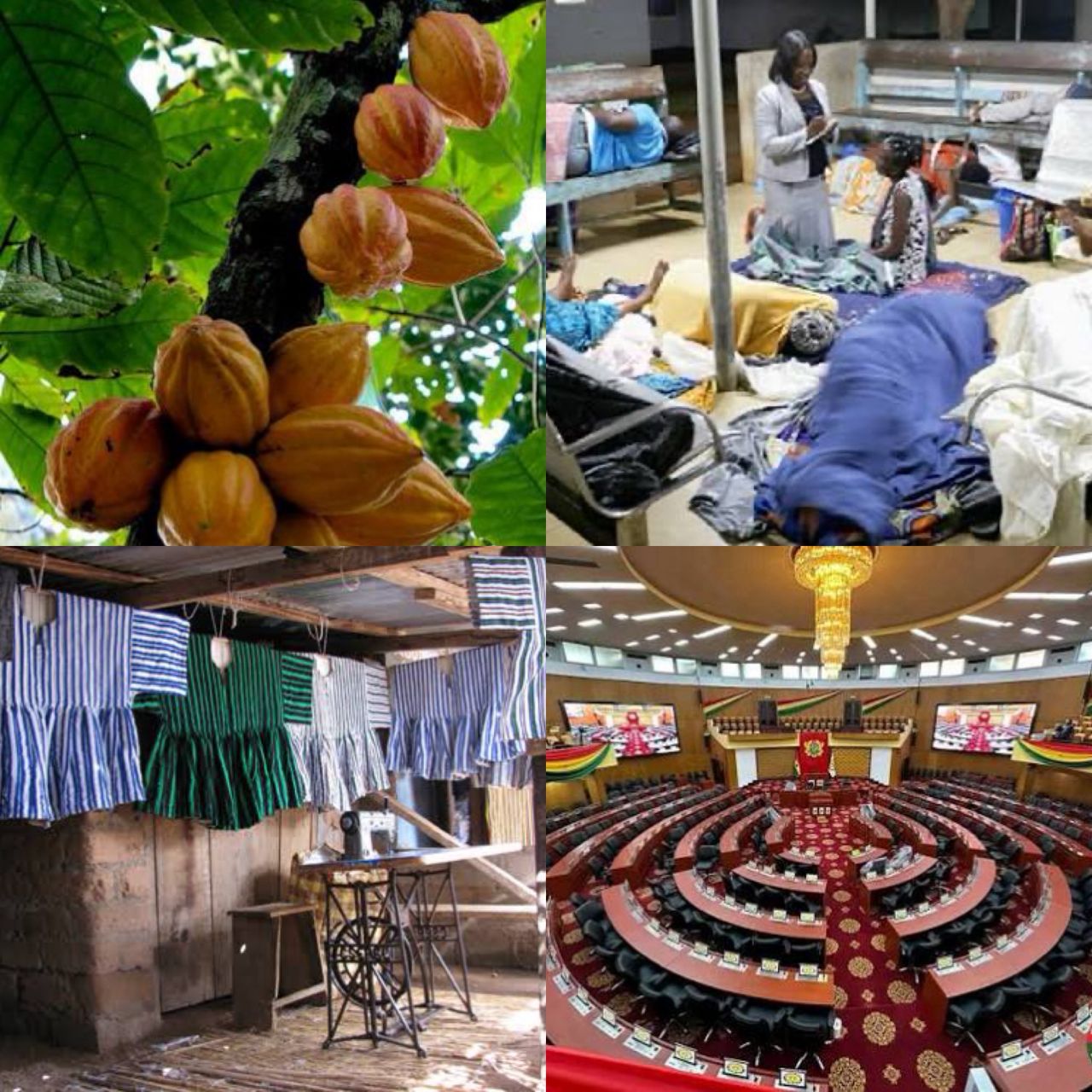
That crisis became tragically human in the recent “no bed syndrome” incident that ended in the death of a young man named Charles Amissah after a hit-and-run accident in Accra. After sustaining critical injuries, he was transported by ambulance from one major facility to another, including the Police Hospital, the Greater Accra Regional Hospital, and finally the Korle Bu Teaching Hospital. At each stop, he was refused admission because there was allegedly “no bed.”
For nearly three hours, the victim lay bleeding in an ambulance within the capital city of Accra. Not because treatment was impossible, but because the system could not or would not make room. He eventually died before receiving definitive care. This was not a rural outpost or an understaffed clinic; these were flagship hospitals meant to represent the highest standard of public healthcare in Ghana.
The incident exposed more than overcrowding. It raised disturbing questions about emergency protocols, accountability, and the basic duty of care. In emergency medicine, stabilisation comes before paperwork, referrals, or bed counts. When a patient in critical condition is turned away repeatedly, “no bed” stops being an explanation and starts sounding like institutional failure. In that moment, healthcare becomes a lottery — and luck is not a health policy.
Beyond the cities, another crisis is unfolding quietly but steadily in cocoa-growing communities. Cocoa farmers, the backbone of Ghana’s export economy are threatening demonstrations over unpaid arrears owed by the Ghana Cocoa Board. According to reports, many farmers delivered cocoa months ago, some as far back as November, yet remain unpaid. In the meantime, they are unable to service loans, maintain farms, or even meet basic household needs.
The problem is compounded by a broader collapse in the rural environment. Galamsey activities have polluted rivers and streams that cocoa communities depend on for water. Some farmers report losing access to their farms entirely, while others watch harvested cocoa deteriorate because Licensed Buying Companies (LBCs) have delayed purchases or payments. This is not just about farmer welfare; it is about foreign exchange earnings, national revenue, and food security. When cocoa farmers suffer, the consequences ripple through the entire economy.
Illegal mining has also poisoned water bodies across the country, forcing communities to rely on sachet water or unsafe alternatives. This is no longer an environmental footnote; it is a public health emergency in slow motion. Yet the fight against galamsey often feels reactive — heavy on announcements, light on sustained enforcement and accountability. Polluted rivers today become hospital admissions tomorrow.
Waste management adds another layer to the contradiction. Arrests for open defecation continue, but many communities still lack household toilets and functional public facilities. Criminalising people for circumstances created by infrastructure failure is not governance; it is deflection.
Against this backdrop, many Ghanaians were stunned when the Ministry of Tourism announced Wednesdays as “Fugu Day,” inspired by a cultural encounter involving President Mahama during a visit to Zambia. Promoting Ghanaian culture and supporting local textiles are worthy goals. But governance is also about timing and prioritisation.
When hospitals lack beds, when farmers are unpaid, when water is unsafe, and when young people feel abandoned, symbolic initiatives, no matter how well-intentioned can feel tone-deaf. Arguments about indirect job creation may have merit, but indirect benefits cannot substitute for direct intervention in crises that are already costing lives and livelihoods.
Similarly, renewed discussions about constructing a new parliamentary complex projected to cost millions of cedis raise uncomfortable questions. At a time when emergency wards are overstretched and rural producers are unpaid, the optics of prioritising institutional comfort over citizen survival are difficult to justify.
To be fair, the National Democratic Congress government that assumed office in 2025 has taken steps that offer some relief. Fuel price reductions and relative cedi stabilisation have eased pressure. But these are not extraordinary achievements; they are the baseline expectations after years of economic strain under the previous New Patriotic Party administration. The danger lies in celebrating normal governance as exceptional performance. When the bar is set too low, accountability disappears.
What Ghanaians are asking for is not perfection. It is focus. A government that understands that healthcare capacity, timely payment to farmers, clean water, employment, and environmental protection are not optional add-ons to be addressed after symbolic wins. They are the core of the social contract.
Culture matters. Image matters. Infrastructure matters.
But survival matters more.
Until governance reflects this hierarchy of needs, the frustration will continue to grow quietly, steadily and history has shown that quiet frustrations do not remain quiet forever.