
Each year, during heritage celebrations such as Black History Month and African Heritage Month, people reflect on the long and complex relationship between Africa and the African diaspora. One of the most remarkable chapters of that relationship unfolded during the late 1950s and 1960s, when the newly independent nation of Ghana became a powerful symbol for Black Americans searching for identity, dignity, and global belonging.
For a brief but influential period, a deep political and cultural bridge formed between Accra and Harlem, linking African independence movements with the Civil Rights and Black Power struggles in the United States. Though that connection eventually weakened, its cultural influence continues to shape fashion, music, and Black identity today.
Ghana and the Birth of a Global Black Symbol
When Ghana gained independence from Britain on March 6, 1957, it marked a historic moment. It was the first sub-Saharan African colony to achieve independence in the modern era, and its leader, Kwame Nkrumah, quickly became one of the most visible figures in global Pan-African politics.
For African Americans living under segregation and racial inequality, Ghana represented something profoundly hopeful: a modern Black nation governed by Black leadership.
Dr. Martin Luther King Jr., who attended Ghana’s independence ceremony, captured the significance of the moment when he later said:
“The independence of Ghana is significant because it is a symbol of hope for oppressed peoples all over the world.”
The event resonated deeply in Black communities across the United States. Newspapers such as the New York Amsterdam News and the Chicago Defender reported extensively on Ghana’s progress, and celebrations of Ghana’s independence were held in cities like New York, Chicago, and Washington, D.C.
For many African Americans, Ghana became more than a country—it became a symbolic homeland.
The Pan-African Vision of Kwame Nkrumah
Part of Ghana’s influence was intentional. Nkrumah believed strongly in Pan-Africanism, the idea that people of African descent around the world shared a common destiny.
He famously declared:
“The independence of Ghana is meaningless unless it is linked with the total liberation of Africa.”
Under his leadership, Ghana positioned itself as a meeting place for Africans and members of the diaspora. Intellectuals, activists, and artists from the United States travelled to Accra to participate in this vision.
Among them were:
-
W.E.B. Du Bois, the renowned scholar and civil rights pioneer
-
Shirley Graham Du Bois, writer and activist
-
Maya Angelou, who lived and worked in Ghana in the early 1960s
-
Julian Mayfield, novelist and political activist
Their presence helped transform Accra into a hub of Black international thought and collaboration.
Malcolm X and the Globalisation of the Black Struggle
The connection between Ghana and Black America deepened further in 1964, when Malcolm X visited Ghana during his travels across Africa.
Speaking at the University of Ghana, Malcolm X emphasised that African Americans should view their struggle not as an isolated minority issue but as part of a larger global movement.
He argued:
“We are Africans who just happen to be in America.”
This perspective reinforced the idea that the civil rights struggle in the United States was connected to the broader fight against colonialism and racial oppression around the world.
Cultural Exchange: Fashion, Names, and Identity
Even as political relationships grew, cultural exchanges flourished.
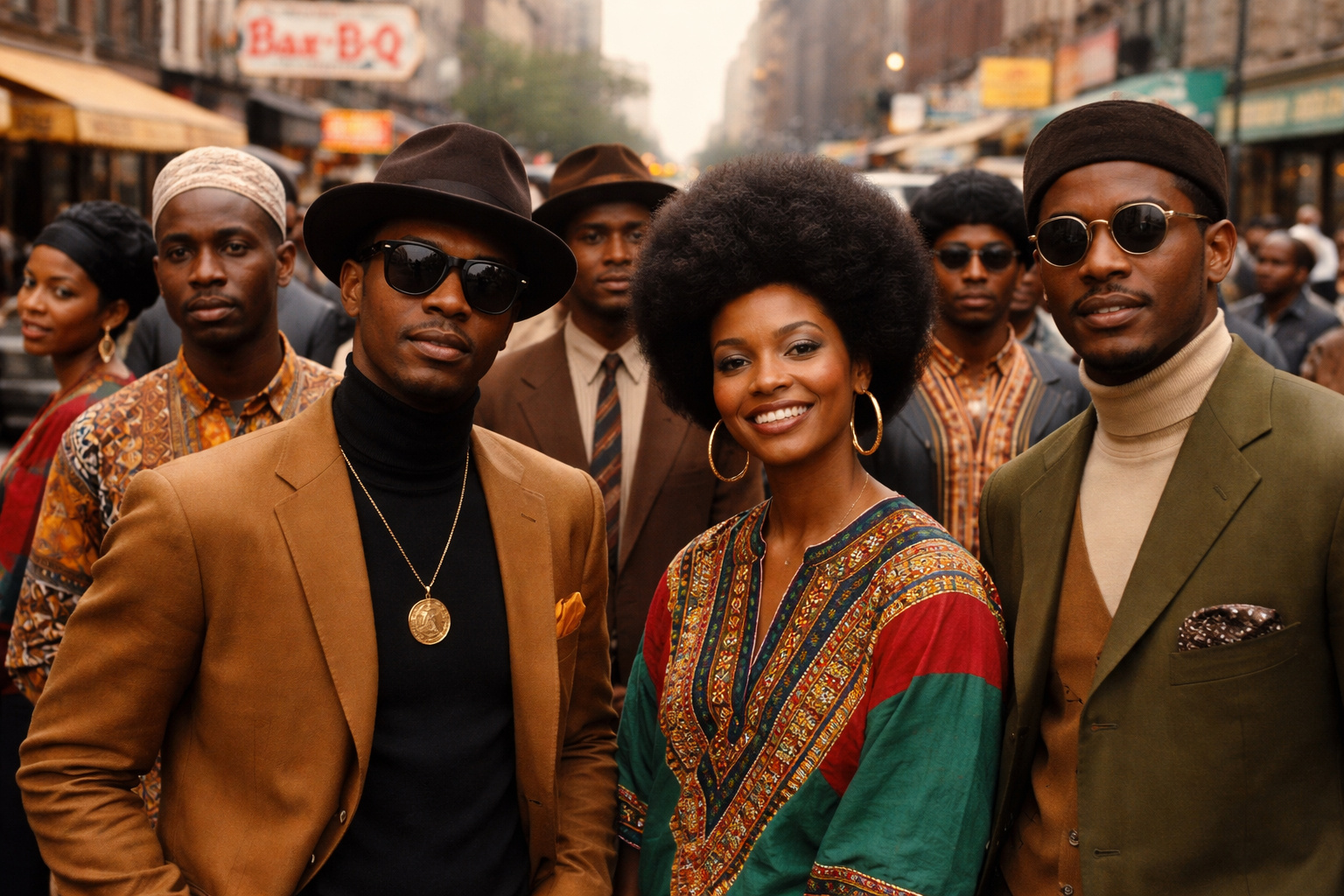
African aesthetics became powerful expressions of identity within the Black Power movement. During the late 1960s and early 1970s, many African Americans embraced symbols of African heritage in everyday life.
Fashion became one of the most visible expressions of this cultural revival.
Garments such as dashikis, kente cloth, and African beadwork appeared at political rallies, cultural festivals, and university campuses. These styles represented more than fashion—they were statements of pride and resistance.
Names also reflected this shift. Some families chose African names such as Kwame, Kofi, Amina, and Ama as part of a broader effort to reclaim cultural identity lost through slavery.
Music and entertainment followed similar patterns. Jazz musicians, soul artists, and later hip-hop performers incorporated African rhythms, imagery, and political ideas into their work. African themes became embedded in album art, stage performances, and film.
Through fashion and entertainment, the connection between Africa and the diaspora moved from political meetings into everyday cultural expression.
The Political Turning Point
Despite this momentum, the relationship faced a major turning point in 1966, when Kwame Nkrumah was overthrown in a military coup.
Nkrumah had been the most committed advocate of building a Pan-African bridge between Africa and the diaspora. After his removal, Ghana’s government shifted its focus toward domestic economic and political stability rather than international Pan-African activism.
Many African American expatriates living in Ghana lost official support and gradually left the country.
At the same time, the political climate in the United States was evolving. The late 1960s and early 1970s brought internal divisions within the Civil Rights and Black Power movements, as well as new domestic challenges such as economic inequality and urban unrest.
Attention increasingly shifted toward local struggles, and the intense Ghana-centered focus of earlier years slowly faded.
From Political Alliance to Cultural Memory
Although the political alliance weakened, the cultural legacy endured.
The Pan-African ideas that circulated between Ghana and Black America helped reshape how many people of African descent understood their identity and history. African symbolism continued to appear in fashion, music, literature, and education.
Today, heritage celebrations—whether Black History Month in the United States or African Heritage Month in various communities around the world—serve as reminders of that remarkable moment when Africa and the diaspora briefly converged in shared political and cultural purpose.
The story of Ghana and Black America in the 1960s illustrates how ideas, identities, and movements can travel across oceans. Even when political connections shift or fade, the cultural bonds created during those moments often endure.
From the dashiki worn on a university campus to the rhythms of African-influenced music on a global stage, the echoes of that Pan-African dream continue to resonate.