

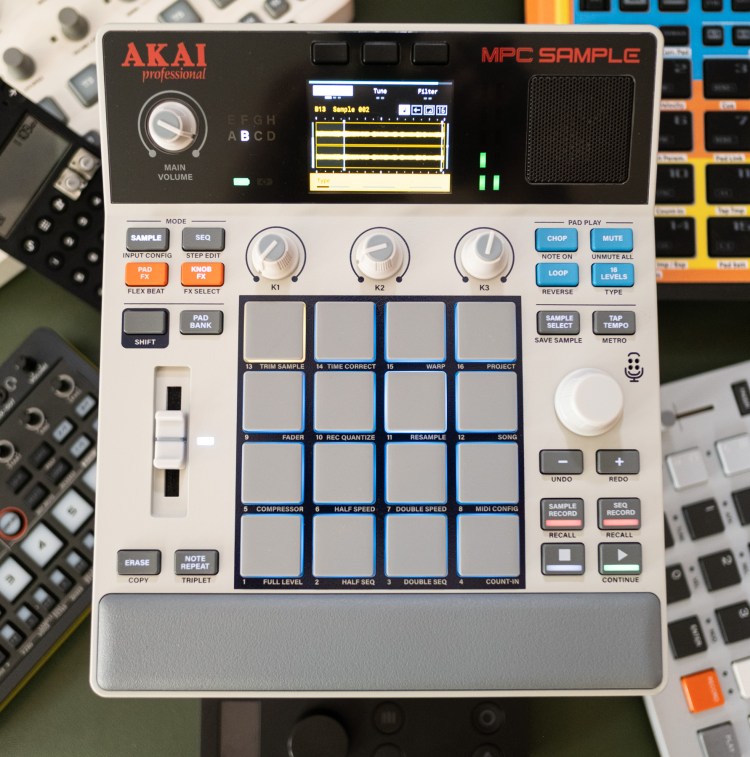
On March 24, 2026, Akai Professional officially released the MPC Sample, a compact, type c ported, battery-powered hardware sampler that has quickly captured the attention of producers worldwide.
What began as a leak earlier in March rapidly turned into one of the most talked-about gear releases in recent years. Images and early information circulating online created anticipation across the music production community, and when Akai confirmed the product, the response was immediate and intense.
At its core, the MPC Sample represents a deliberate return to Akai’s roots. Inspired by legendary machines like the MPC60 and MPC3000, the device embraces the original philosophy of sampling, simple, tactile, and creative, while adapting it for a new generation of producers.
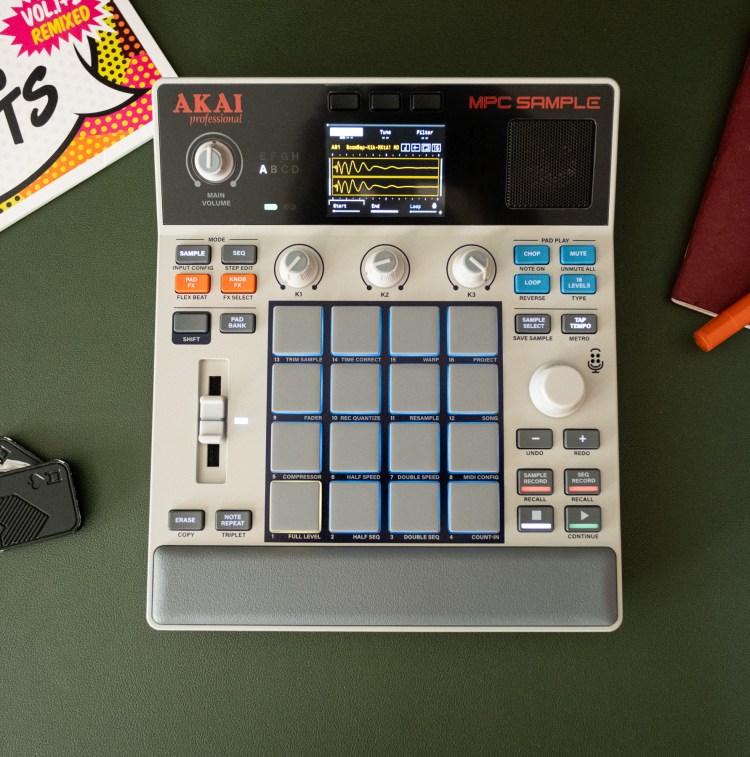
Visually, the machine reflects that legacy. It carries the familiar MPC layout but in a smaller, more portable form factor – essentially a miniature MPC, something many producers have dreamt about for years.
But beyond aesthetics, it’s the functionality that has placed producers in what many describe as a “chokehold.” The MPC Sample is a fully standalone unit, meaning no computer or DAW is required. It features a built-in sampler engine, sequencer, effects suite, microphone, speaker, and rechargeable battery making it a complete music production tool that fits into a backpack.
Under the hood, the device comes with a 2GB of RAM and 8GB of internal storage (expandable via microSD), along with a responsive pad workflow that stays true to the MPC tradition.
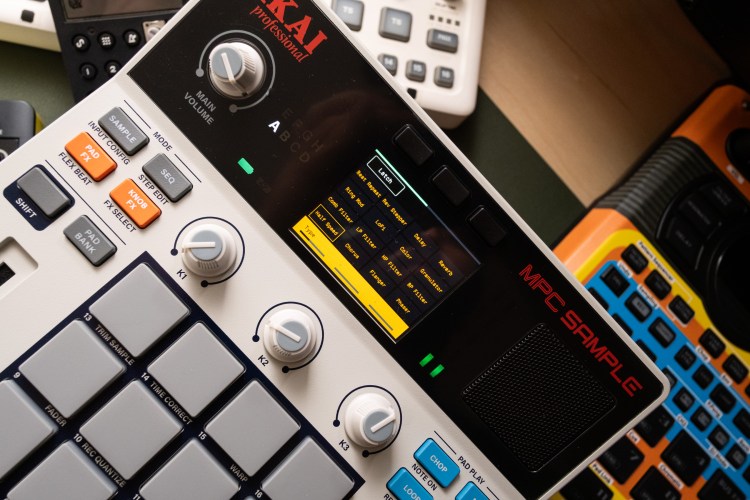
With over 100 built-in effects, including lo-fi processing, delay, modulation, and more, it gives producers immediate creative control without needing external gear.
Priced at $399, the MPC Sample positions itself as both accessible and powerful, competing directly with other modern portable samplers like the Roland SP-404MKII and Teenage Engineering’s KO-II.
Across YouTube and social media, the reception has been overwhelming. Influential creators such as Bolo and Ave Mcree have shared hands-on videos breaking down workflow, sound design, and real-time beat creation. Their reviews highlight how intuitive the device is, especially for fast idea generation and sample chopping.
At the same time, demand has surged. Many producers have openly shared how difficult it has been to secure one, with early stock moving quickly after release. This scarcity has only intensified the hype, turning the MPC Sample into a must-have piece of gear within days of launch.
The cultural co-sign has also been strong. When respected figures like Jermaine Dupri showcase ownership, it reinforces the device’s credibility, not just as a beginner tool, but as something even top-tier producers are willing to explore.
What makes this release truly significant is its impact on workflow. The MPC Sample removes the barriers between inspiration and execution. Whether in a studio, on a couch, or on the move, producers can now sample, chop, sequence, and arrange music instantly, without compromise.
In many ways, Akai haven’t just released another MPC, they have revived a pure feeling.
A feeling rooted in the early days of sampling, where creativity came first, limitations sparked innovation, and music could be made anywhere.
And judging by the global reaction, that spirit is alive again, this time, in the palm of your hands.
Explore all the juicy entertainment news you desire with GhanaWeekend on WhatsApp!
Click on the link to join the GhanaWeekend channel for curated, meaningful stories tailored just for YOU: https://whatsapp.com/channel/0029VaJ31iEDTkK8wIHNj31A