
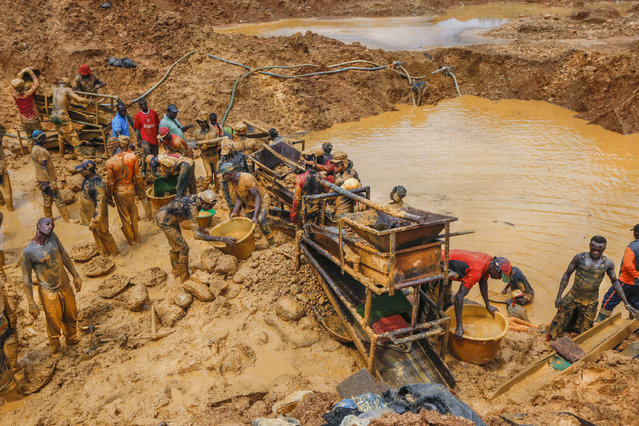
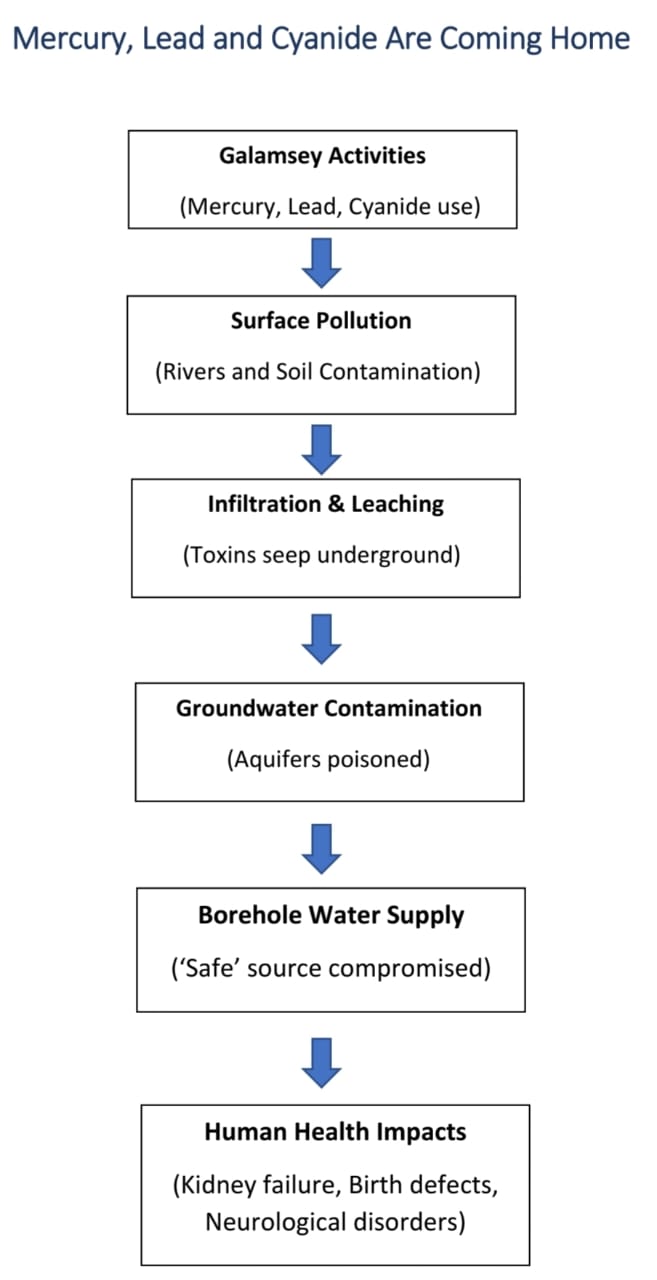
Groundwater (the source of boreholes and wells) is part of a connected hydrological cycle . Pollutants from surface activities like galamsey seep into soils and riverbeds, and through infiltration and leaching, they contaminate aquifers. Once heavy metals such as mercury, lead, and cyanide compounds reach groundwater, they _persist for decades or even centuries because they do not degrade._
The frightening reality is that groundwater contamination is often silent : boreholes may appear clean and tasteless while carrying toxic loads invisible to the naked eye.
Communities in mining zones of Ghana – especially in Ashanti, Eastern, Western, and Central Regions – have already reported unsafe borehole water due to elevated heavy metal concentrations. Mercury and lead exposure cause kidney failure, neurological damage, and developmental defects, while cyanide poisoning affects the cardiovascular and nervous systems.
If galamsey continues unchecked, borehole water, which many rural communities see as a last refuge for “safe” drinking water, will no longer be safe. When that happens, Ghana faces a total water security collapse.
Let me end here with a prayer: “May God deliver us from the venom of the cobra, teeth of the tiger”, and the catastrophic collapse of thought from Ghanaian politicians.
And to the Ghana Medical Association – in whose hands the pulse of the nation beats – I search for a prayer, but words escape me. For I am no poet in prayer, only a heart heavy with hope.
Wasn’tMe | Steward of the Environment