

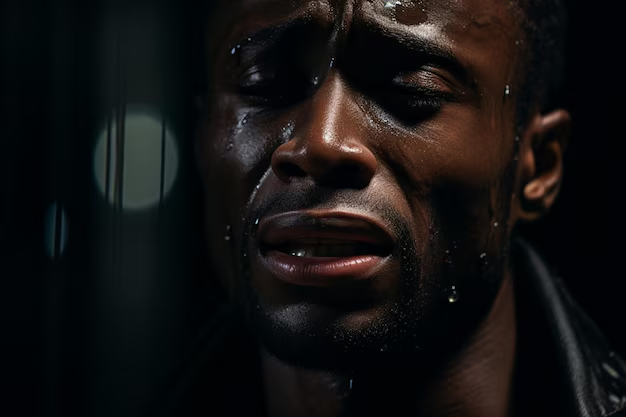
A thirty-two-year-old father in Nairobi has opened up about years of pain inside his marriage, describing a relationship that started with real affection and slowly turned into something he says left him emotionally broken.
Aggrey Mokaya says he met his wife years ago in the Baba Dogo area, where he worked at a pool table and she sold porridge nearby.
He admits he hesitated at first, assuming a woman that warm and put together already belonged to someone, but the two grew close over several months and eventually became a couple.
She later moved in with him, and not long after that, she became pregnant, right around the time the world went into lockdown. He remembers that period as a genuinely happy one, a season where the relationship felt solid and full of promise.
For the first three years of the marriage, he says life was calm. Whatever disagreements came up felt ordinary, the kind of friction he assumed every couple worked through.
The shift, according to him, came in year four, when his wife began questioning his movements more intensely, especially on nights he came home late from his work touting matatus.
What made the accusations harder to fight, he says, was her insistence that she had dreams that later came true, including one in which she claimed to see him stop somewhere else before finally getting home. No explanation about his work schedule seemed to settle her suspicion once that idea took hold.
He describes the conflict escalating over time, pointing to one incident where he says she struck him with a one-litre water bottle during an argument.
He also says the tension in the house has visibly affected their young son, who he claims now flinches and pulls back whenever voices in the home get raised. The breaking point he keeps returning to is a filmed dispute over custody of their six-year-old boy, with both parents wanting the child to live with them.
In the middle of that confrontation, their son was reportedly in tears, begging to remain with his father, while Aggrey came away with scratches on his face that he attributes to his wife.
What stands out most in his account is not just the physical altercation but the emotional weight he says he has been carrying quietly.
He describes reaching a point of feeling so overwhelmed that thoughts about whether he even wanted to keep living crossed his mind, and he says he now carries a handwritten letter addressed to his son and to the world at large, written in case anything were to happen to him. It is a detail that says more about the toll of prolonged domestic conflict than any single incident could on its own.
His story adds to a steadily rising number of accounts from men in Kenya speaking publicly about experiencing abuse within marriage, a subject that still carries heavy stigma and is often dismissed or laughed off in everyday conversation.
Whatever the full picture of the marriage turns out to be, since only one side of the story is on record here, his willingness to speak about the emotional collapse he says he has felt is itself worth sitting with, especially given how rarely men in his position choose to say any of it out loud.