

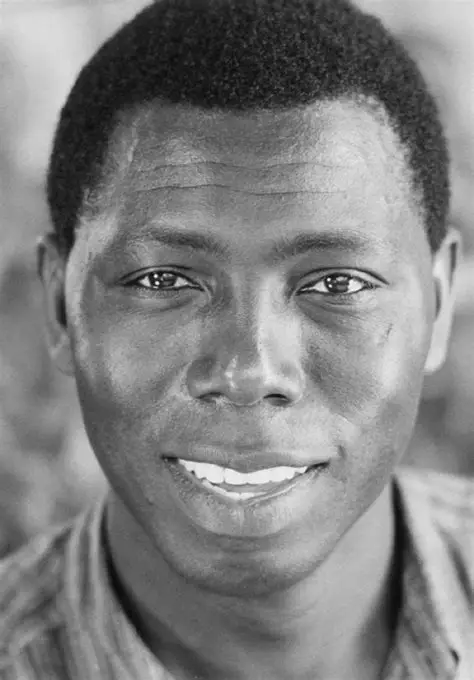
It began with something simple. A quiet evening, an old sitcom, and a familiar scene from Mind Your Language (Season 1).
In the middle of the laughter and misunderstandings, a figure walked into Mr. Brown’s classroom—composed, observant, authoritative.
At first glance, it was just another supporting role in a British comedy. But it wasn’t. That man was Gyearbuor Asante, and his story stretches far beyond that brief screen appearance.
Born in Accra on November 4, 1941, Frederick Christopher Kwabena Gyearbuor Asante Erskine came from a royal lineage in Kwahu Tafo.
His life could easily have followed a traditional path, one of leadership, authority, and eventual chieftaincy. But Asante made a decision that, at the time, was both unconventional and risky.
He chose acting. To understand how bold that choice was, you have to consider the era. The 1960s and 70s were not welcoming spaces for African actors in global media. Representation was limited, often distorted, and rarely dignified. Yet, Asante left Ghana for the United Kingdom and enrolled at the Mountview Academy of Theatre Arts, one of Britain’s respected drama schools. This was not just a career move—it was an act of defiance against limitation. He wasn’t just chasing a dream; he was stepping into a system that had not been built for him and insisting on belonging.
Under the screen name Christopher Asante, he began to build a career across British television and theatre. His appearances in productions such as The Professionals, The Dogs Of War, Desmond’s, Hazell, Space: 1999, and Mind Your Language may not always have placed him at the center of the story, but they carried something far more important: presence. At a time when African characters were often reduced to stereotypes, Gyearbuor Asante brought composure, intelligence, authority, and humanity to the screen. He didn’t rely on exaggerated performances to stand out; his strength was in restraint, in the quiet confidence he carried into every role. His portrayal of Inspector Roger Kenyon in *Mind Your Language* is a clear example. In a classroom defined by chaos and comedic confusion, his character stood as a figure of order and evaluation—calm, observant, and dignified. It was subtle, but powerful.
While many may remember him from that brief appearance, his most impactful work came later in the iconic British-Caribbean sitcom Desmond’s (Demon Barber), where he played Matthew. In a show driven by humour, Matthew was thoughtful, grounded, and morally centered—a character who brought depth and reflection into the narrative. Through this role, Asante helped reshape how Black characters were portrayed on British television, presenting them not as one-dimensional figures, but as complex, thinking, emotionally aware individuals navigating identity, migration, and belonging.
What makes Gyearbuor Asante’s journey even more significant is that his contribution extended far beyond acting. He believed deeply in the role of the arts as a tool for cultural identity, education, and preservation. When he returned to Ghana in the 1990s, he did so with purpose. He was not simply coming home; he was bringing back experience, exposure, and vision. Serving as a Cultural Ambassador for Ghana, he contributed to the growth of the arts and helped strengthen connections between Ghana and the global creative community. At a time when African cinema had not yet gained widespread international recognition, Asante was already part of a generation laying the foundation for that future visibility.
He passed away on August 2, 2000, at the age of 58, but his legacy did not end there. More than two decades later, his influence continues to be felt. At the Mountview Academy of Theatre Arts, where he once trained, the Gyearbuor Asante Prize for Acting was established in his honor, awarded to outstanding students and ensuring that his name continues to inspire new generations of performers. That is legacy in its truest form not just remembrance, but continuation.
Today, conversations about African excellence in film often highlight recent breakthroughs and global recognition. But long before that spotlight arrived, there were individuals like Gyearbuor Asante, men who stepped into unfamiliar spaces, faced invisible barriers, carried their identity with dignity, and left doors open behind them. He may not have been widely celebrated in his time, but his work contributed to something larger: the gradual and undeniable presence of African talent on the global stage.
So yes, it started with a simple moment, watching an old sitcom and noticing an inspector walk into a classroom. But that moment became something more: a rediscovery of a Ghanaian royal who chose art over tradition, a pioneer who challenged an industry simply by showing up fully as himself, and a cultural bridge between Ghana and the world. Gyearbuor Asante’s story reminds us that not all impact is loud and not all pioneers are widely known, but some lives, quietly and consistently, change the narrative forever.