
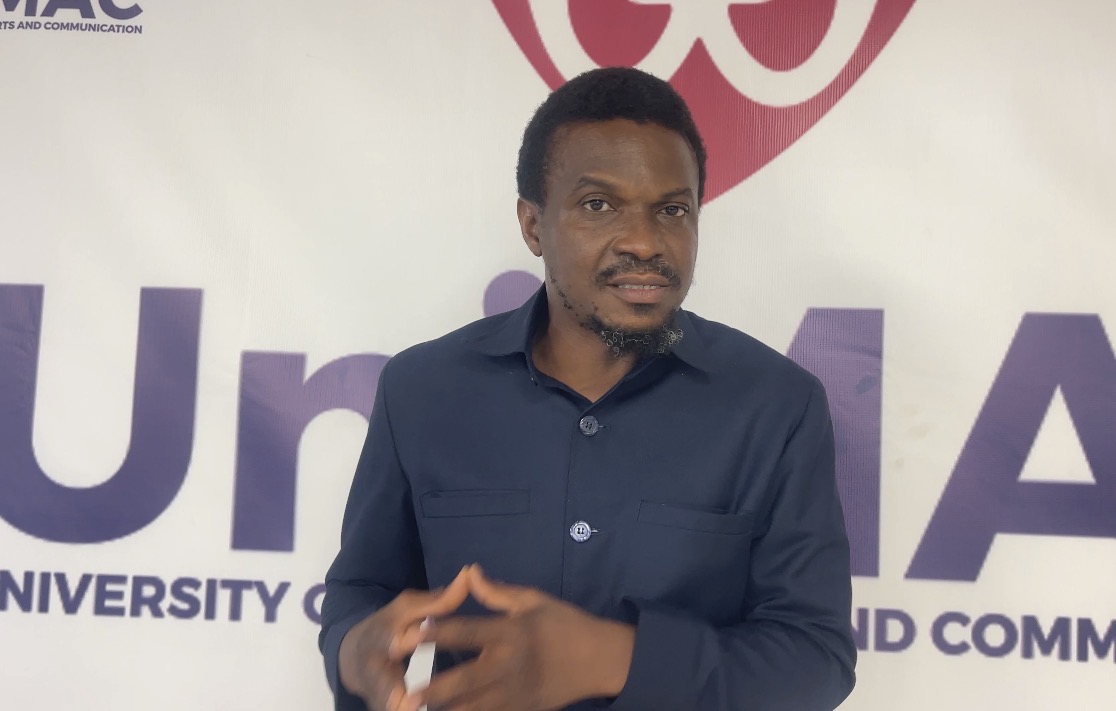
The Dean of the School of Journalism and Media Studies at the University of Media, Arts and Communication, Professor Etse Sikanku, has emphasised that press freedom remains essential to sustaining and advancing democracy.
He made these remarks during a public lecture and stakeholder dialogue held at the university’s South Legon campus to mark World Press Freedom Day, on Monday May 4.
According to Prof Sikanku, a free and independent press serves as the backbone of any democratic society, enabling journalists to perform their duties without fear or interference.
“Press freedom is the cornerstone of democracy. Without a free press, journalists cannot perform their functions in society,” he stated.
He noted that journalists play a critical watchdog role by holding authorities accountable and giving voice to marginalized groups. He stressed that access to accurate and timely information is crucial in empowering citizens to make informed decisions and actively participate in governance.
Describing information as a public good, Prof Sikanku said its availability is necessary for citizens to be self-governing and for democracies to thrive.
He, however, raised concerns about growing threats to press freedom, citing censorship, intimidation and restrictions on digital expression as key challenges confronting journalists. He warned that such limitations not only hinder national development but also weaken democratic institutions.
“If journalists do not have that freedom to perform their role, then we cannot have a progressive society,” he cautioned.
Touching on developments in the digital era, Prof Sikanku highlighted the increasing role of artificial intelligence in media practice, urging stakeholders to ensure that technological advancements support rather than undermine press freedom.
He further described journalists as the “oxygen” and “lifeline” of society, given their role in promoting transparency, particularly in the use of public resources, and providing platforms for diverse voices.
The event formed part of efforts by the School of Journalism and Media Studies(SOJAMS) of the university to promote media freedom, encourage ethical journalism and deepen discussions on the future of the press in Ghana.